
Alexandra Askandar Honored with ‘Impactful Woman Leader’ and ‘Impact on Green Initiatives Leadership’ Awards at Kumparan Awards: Impact Makers 2024

Jakarta, December 23, 2024 – Alexandra Askandar, Vice President Director of Bank Mandiri and a prominent figure in Indonesia’s banking industry, has achieved another remarkable milestone. She received two prestigious awards, Impactful Woman Leader and Impact on Green Initiatives Leadership, at the Kumparan Awards: Impact Makers 2024, recognizing individuals driving positive impact and advancing Indonesia’s progress. These awards highlight her significant contributions to the company, society, and the environment. Alexandra expressed her gratitude, saying, “I received these awards because I am part of an organization that consistently embraces transformation. These honors are dedicated to my colleagues, mentors, family, and all Indonesian women. I am deeply grateful, and this recognition is not just for me but for every woman who dares to step forward, lead, and create change.” According to data from Indonesia’s Central Bureau of Statistics (BPS), as of May 2024, only 35.02% of managerial positions in Indonesia are held by women. Alexandra views this as a challenge that must be addressed, particularly through initiatives like Mandiri Women Leader. This program empowers women in the workplace by providing training, career mentorship, and family-friendly policies such as lactation rooms and childcare facilities, ensuring women can balance their professional and personal lives seamlessly. Alexandra added, “I believe women play a strategic role in driving change, both in the workplace and in society. I hope to continue inspiring Indonesian women to break barriers and realize their full potential.” Under Alexandra’s leadership, Bank Mandiri has become a pioneer in implementing Environmental, Social, and Governance (ESG) principles. The bank’s sustainability strategy includes ambitious goals such as achieving Net Zero Emissions (NZE) by 2030 and sustainable financing by 2060 or sooner. Through innovations like Green Loans and Sustainability-Linked Loans, Bank Mandiri supports renewable energy sectors, sustainable land use, and green building development across Indonesia. These financial solutions not only foster economic growth but also contribute to Indonesia’s clean energy transition. Alexandra’s leadership embodies the belief that gender equality and sustainability are interdependent elements essential for creating long-term positive impact. By empowering women in the workforce and advancing clean energy transition through innovative financial solutions, Bank Mandiri is not only driving change but also leaving a legacy for future generations. As a visionary leader, Alexandra remains committed to delivering solutions that empower communities and preserve the environment, positioning Bank Mandiri as a symbol of inclusive and sustainable progress in Indonesia.
Support 8% Economic Growth, Bank Mandiri Reinforces Its Strategic Role in Driving Renewable Energy Investment in Indonesia at COP 29 United Nations Framework Convention on Climate Change
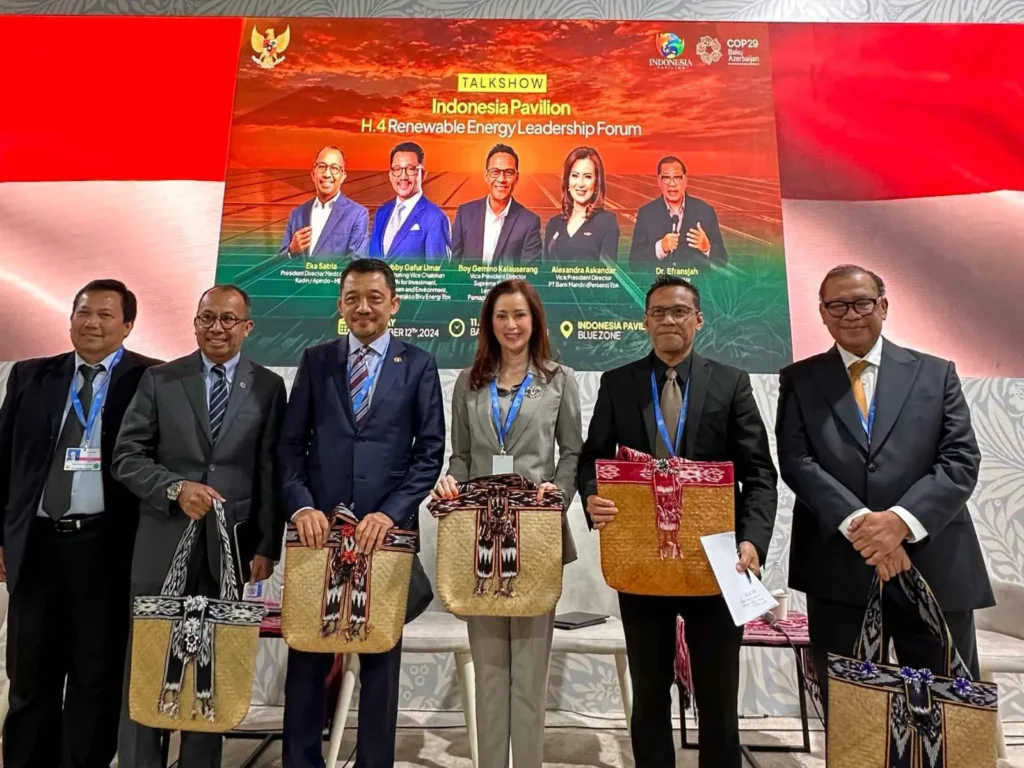
Baku, Azerbaijan, November 15, 2024 – PT Bank Mandiri (Persero) Tbk (“Bank Mandiri”) sees enormous potential for Renewable Energy (RE) in Indonesia, reaching up to 3,687 GW, although its current utilization rate remains far from optimal. The use of renewable energy is also a crucial element in achieving the net zero emissions (NZE) target by 2060 or sooner. Therefore, this potential can be realized through support from various sectors, one of which is the banking sector. “The total realization of six renewable energy sources in Indonesia has only reached 0.36 percent. These six energy sources include solar, wind, hydro, tidal, bioenergy, and geothermal,” said Alexandra Askandar, Vice President Director of Bank Mandiri during the second day of the Renewable Energy Leadership Forum session at COP 29 in Baku, Azerbaijan (12/11). Among the six renewable energy sources, geothermal ranks highest in utilization with a usage rate of 10.52 percent, while tidal energy has yet to be realized. According to Alexandra, the low utilization of renewable energy is caused by investment levels that tend to be lower compared to fossil fuel-based energy. Data from the Institute for Energy Economics and Financial Analysis (IEEFA) shows that renewable energy investment in Indonesia has declined by 4 percent over the past seven years, while investment in fossil energy has instead increased by 2.4 percent. Furthermore, Alexandra identified four main factors contributing to the high investment costs of renewable energy in developing countries, including the lack of infrastructure required to build renewable energy power plant sites, the high cost of providing the necessary technology compared to developed countries, limited financial instruments specifically designed to address various risks in renewable energy development, and high transaction costs to finance relatively small-scale power plants. To overcome these challenges, Alexandra emphasized the importance of synergy between policy instruments and financial instruments, where both can support one another. In terms of policy instruments, relevant stakeholders can establish regulatory frameworks, decarbonization roadmaps, and policies related to carbon tax, trade, and pricing. On the other hand, financial institutions can provide financial instruments that include sustainable financing solutions, such as sustainability-linked loans, sustainability bonds, green bonds, and others. Bank Mandiri has adopted a client-focused strategic approach toward a low-carbon economic transition. For example, through partnerships with global financial institutions, the establishment of an ESG Desk, and collaboration with the government regarding sustainable business practices. “We see the combination of policy and financial instruments as the key that will enable financial institutions to play an important role in energy transition projects,” said Alexandra. Bank Mandiri continues to demonstrate its commitment to supporting sustainable financing, which has reached Rp285 trillion with annual growth of 12.8%. As of September 2024, Bank Mandiri has disbursed Rp10 trillion in financing specifically for the renewable energy sector. “We would like to invite stakeholders, partners, and the global community to work together with Bank Mandiri and become sustainability champions. To optimize renewable energy investment potential in Indonesia, we need to address various key challenges, open dialogue regarding existing financing schemes and potential new financing opportunities, and accelerate renewable energy development in Indonesia,” Alexandra concluded.
ILUNI FEB UI Chairwoman Alexandra Askandar Encourages the Green Economy Potential as a Source of New Economic Growth at ILUNI FEB UI Breakfast Forum and Launch of the Green Economy Book
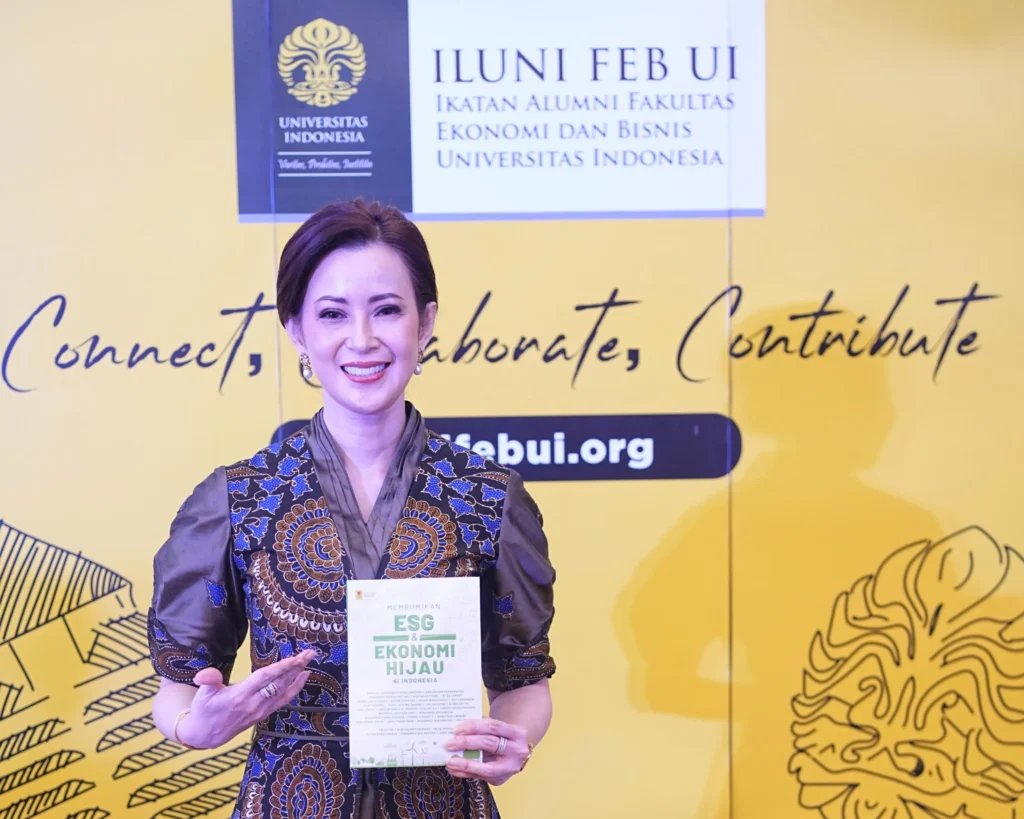
Jakarta, November 12, 2024 – Alexandra Askandar, Vice President Director of Bank Mandiri and Chairwoman of the Alumni Association of the Faculty of Economics and Business at the University of Indonesia (ILUNI FEB UI), emphasized the importance of exploring green economy strategies as a solution to climate change and the current limitations of natural resources, issues faced by both Indonesia and the global community. Alexandra delivered this message at the ILUNI FEB UI Breakfast Forum, which was themed “Can the Green Economy Become a New Source of Economic Growth?” and the launch of the ILUNI FEB UI Green Economy Book titled “Grounding the ESG & Green Economy in Indonesia” attended by Alumni and stakeholders. Also attending to deliver keynote speeches were Prof. Bambang PS Brodjonegoro, Professor at FEB UI and Special Economic Advisor to the President (FEB UI Class of 1985), and Prof. Mari Elka Pangestu, Professor at FEB UI and Special Presidential Envoy for Trade and Deputy Chair of the National Economic Council. The event was also continued with a panel discussion featuring Ubaidillah Nugraha, Independent Commissioner of PT BRI Life (FEB UI 1991); Christy Desta Pratama, Associate Economist at Conservation Strategy Fund (FEB UI 2000); and Alin Halimatussadiah, Head of Green Economy and Climate Change Studies, LPEM FEB UI (FEB UI 1994). In the opening speech, Alexandra who is also the FEB UI Alumni Class of 1990 highlighted that the green economy is more than just a concept, it is a transformative approach that has the potential to drive sustainable economic growth. “As the global landscape evolves and demands that we adapt, now is the time to harness the green economy as a new engine of economic growth that not only generates financial gains but also preserves environmental sustainability,” The application of the green economy spans multiple sectors and can create new jobs, enhance resource efficiency, and reduce environmental impacts. Alexandra pointed out that this approach strengthens Indonesia’s position in the global market while supporting commitments to reduce carbon emissions and environmental harm. According to modeling simulations by the World Resources Institute (WRI) Indonesia, implementing a green economy could yield substantial long-term benefits for Indonesia, including an average GDP growth of 6.3% from 2025 to 2045. This transition could create around 1.7 million environmentally friendly jobs by 2045, which would account for 38% of new workforce additions. Therefore, cross-sector collaboration is essential to reach these goals, a mission for which ILUNI FEB UI, with its broad membership across diverse sectors, can play a strategic role. In this discussion, Alexandra invited participants to jointly explore how applying green economy principles can open new job opportunities, increase resource efficiency, and mitigate environmental impacts. “The green economy helps us create a balance between economic growth and environmental preservation, making it a crucial strategy for Indonesia’s future,” she added As a tangible commitment to the green economy, Alexandra announced a new initiative by FEB UI alumni from the class of 1990 to donate a charging station to the FEB UI campus. This initiative aims to support the campus’ vision of environmental responsibility and the implementation of Environmental, Social, and Governance (ESG) principles within the academic community. Alexandra hopes this contribution will inspire other alumni to also contribute to sustainability efforts and provide meaningful benefits for the campus and society. In closing, Alexandra urged all parties to work together to advance the green economy for a better future for Indonesia, saying, “Let us open our minds and explore how we can leverage the green economy as a foundation for better and more sustainable economic growth in Indonesia.”
Alexandra Askandar Shares Financial Tips to Simplify Fund Transfers for Millennials and Gen Z Studying Abroad via Livin’ by Mandiri’s Foreign Currency Transfer Feature

Jakarta, November 1, 2024 – Alexandra Askandar, Vice President Director of Bank Mandiri, shares tips for parents who aim to meet their children’s needs—particularly Millennials and Gen Z studying abroad—by utilizing Livin’ by Mandiri’s foreign currency transfer feature as an effective solution. Having children living far from home is a source of pride but also comes with unique challenges, especially in ensuring their needs are met quickly and efficiently. Livin’ by Mandiri addresses this by offering a practical and comprehensive foreign currency transfer solution that is increasingly favored by users. Alexandra Askandar, Vice President Director of Bank Mandiri, stated “As a parent, I deeply understand the importance of providing for our children’s needs as best as possible. We face many concerns, especially when they are studying abroad. To support their daily needs, fund transfers become essential—ideally easy, fast, and available at any time. With the newly upgraded foreign currency transfer feature on Livin’ by Mandiri, we are committed to enabling parents to support their children without worries about high costs or long processing times.” Since its launch in Q1 2023, Livin’ by Mandiri’s foreign currency transfer feature has shown significant growth. As of the end of Q2 2024, the transaction volume for foreign currency sales increased by 196.5% year on year (YoY), reflecting a strong upward trend in usage. The daily average sales volume for foreign currency transfers in Q2 2024 reached IDR 8.3 billion, an 11% increase from the previous quarter’s daily average of IDR 7.5 billion. This growth demonstrates the high interest and trust of customers in using Livin’ by Mandiri as a primary solution for foreign currency transactions. With the availability of foreign currency transfer services on Livin’ by Mandiri, users can now send funds in 17 currency options, including major currencies like USD, GBP, EUR, as well as Asian currencies such as KRW, MYR, JPY, SGD, CNY, HKD, PHP, and others. This flexibility provides convenience for parents to support their children’s needs across different countries in the relevant currency. Moreover, USD transfers can be made to any country worldwide with just a few clicks, offering significant ease for frequent USD transactions. Alexandra also emphasized that beyond currency flexibility, the feature provides 24/7 access, enabling parents to transfer funds at any time without worrying about bank operating hours. With real-time services available in certain countries, funds are transferred faster and more efficiently, ensuring children’s needs are met promptly. In addition to convenience and flexibility, the competitive rates offered by Livin’ by Mandiri make foreign transfers more cost-effective, helping parents manage transfer costs—especially those transferring large amounts regularly. These affordable rates help minimize additional fees, keeping family budgets intact while ensuring children’s needs are met without issue. “We want to ensure that this foreign transfer service is not only practical but also provides peace of mind for parents. Our competitive rates enable them to manage costs more efficiently without compromising the financial support they provide for their children,” Alexandra Askandar added. For parents who wish to learn more about this feature, Livin’ by Mandiri offers full details at bmri.id/tfvalas. As a digital solution, Livin’ by Mandiri continues to innovate to become a trusted banking platform capable of meeting various financial needs, anytime and anywhere.
Bank Mandiri Promotes a Sustainable Future Through Digital Innovation
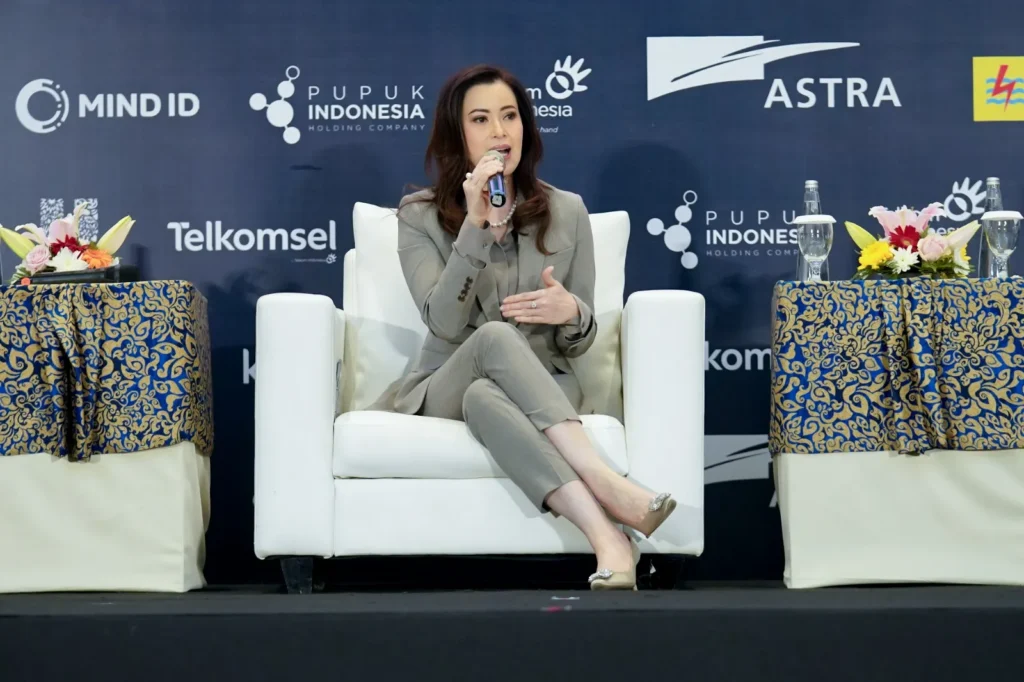
Jakarta, 26 September 2024 – Bank Mandiri is taking a firm and innovative approach to accelerate Indonesia’s green transition by leveraging digital technology and strategic partnerships to empower both individual and industrial customers in their sustainability journeys. At the 2024 Green Initiative Conference initiated by Kumparan, Alexandra Askandar, Vice President Director of Bank Mandiri, emphasized the bank’s unique role in driving sustainable transformation through digital innovation. As Indonesia’s largest wholesale bank, Bank Mandiri remains committed to becoming “Indonesia’s Sustainability Champion for a Better Future,” aiming for Net Zero Emissions (NZE) in operations by 2030 and in financing by 2060 or sooner. Through digital innovation, Bank Mandiri is taking a different approach in the banking industry by utilizing its digital platform capabilities to make green financing more accessible and practical while promoting green financial literacy among the public. For example, through the Livin’ SuperApp, Bank Mandiri will introduce a dedicated segment to help customers adopt a more sustainable lifestyle. This initiative not only raises environmental awareness but also encourages a shift toward more responsible consumer behavior by providing personal insights into their contributions to sustainability issues. Additionally, Bank Mandiri continues to provide easier access to green financial products through the Livin’ SuperApp, such as Green Mutual Funds, Green Mortgages, and electric vehicle financing. This step offers consumers sustainable financial instruments as part of their financial decisions, contributing to the support of the green economy transition. Alexandra Askandar, Vice President Director of Bank Mandiri, stated, “Our focus goes beyond conventional banking services. We are committed to providing innovative solutions that empower the community to be part of the green transition. Through various communication channels to enhance customer literacy and understanding of green finance, we aim to bridge customer awareness and interest with tangible actions by providing access to the green financial products we offer.” Bank Mandiri is also taking significant steps to address climate risks directly. The company has implemented advanced approaches such as the Partnership for Carbon Accounting Financials (PCAF) methodology to measure Scope 3 emissions from its financing portfolio, which now covers 44% of total loans. Additionally, Bank Mandiri’s piloting of the Climate Risk Stress Test (CRST) allows them to assess physical and transition risks within their portfolio, thereby strengthening the company’s climate resilience. Alexandra added, “Addressing climate risk is not just about compliance—it’s about ensuring the sustainability of both our business and the broader economy. By integrating these methodologies, we can make decisions that support both our customers and the environment.” Bank Mandiri’s visionary approach is also demonstrated through the establishment of the Global Climate Tech Fund (GCTF), launched in collaboration with Australian company Investible, through Mandiri Capital Indonesia (MCI). Up to 30% of this fund is allocated to supporting Indonesia’s climate tech ecosystem. This initiative positions Bank Mandiri as a key player in driving local innovation and strengthening the green tech movement in the region. Beyond digital innovation and climate tech, Bank Mandiri is also addressing the structural challenges of Indonesia’s green transition, particularly given the country’s current reliance on fossil fuels and the high investment costs for green projects. Bank Mandiri continues to provide green financing incentives and is actively developing policy frameworks to support the implementation of a carbon tax, reinforcing its role as a key supporter in Indonesia’s transition to a low-carbon economy.