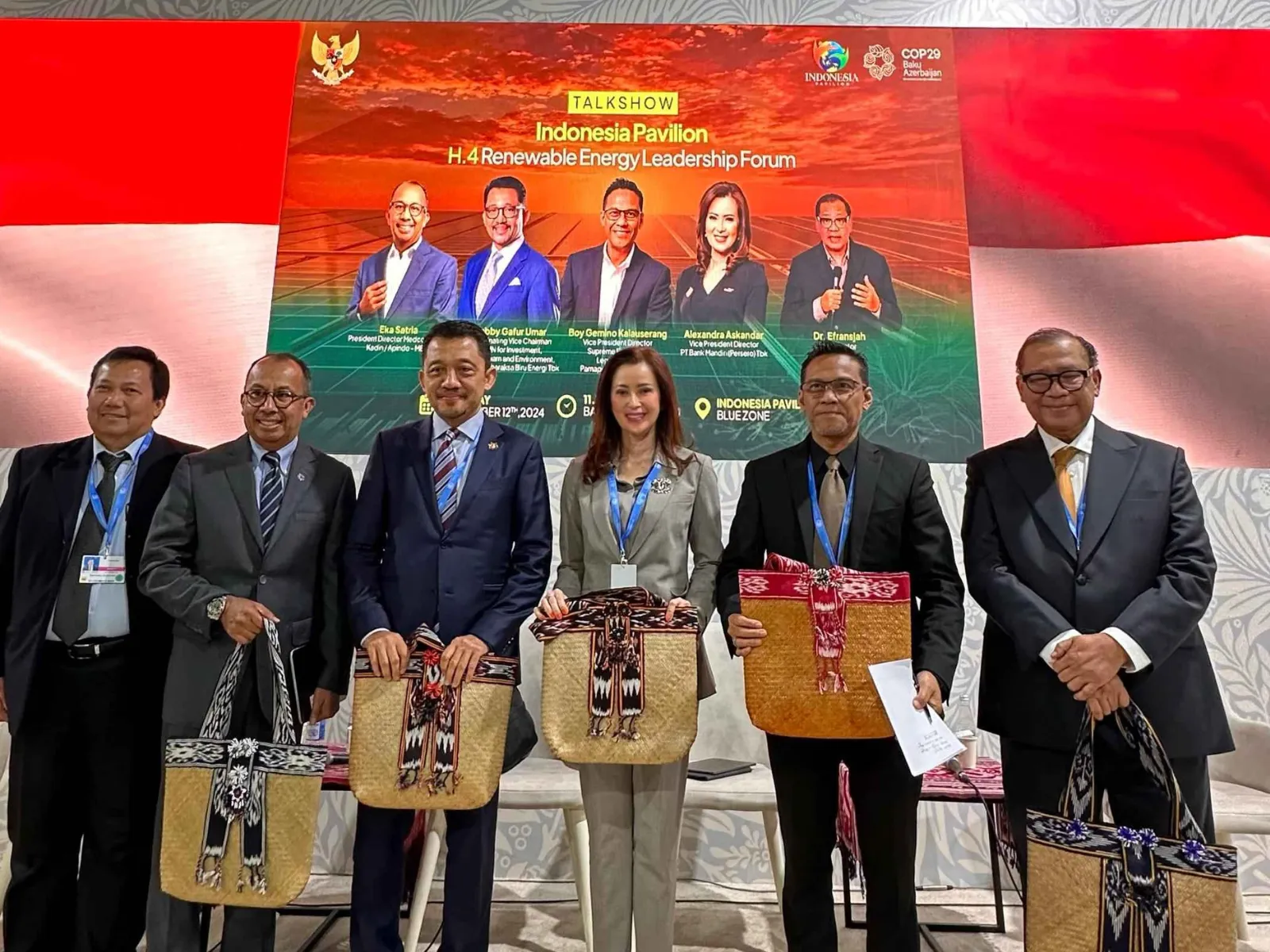
Baku, Azerbaijan, November 15, 2024 – PT Bank Mandiri (Persero) Tbk (“Bank Mandiri”) sees enormous potential for Renewable Energy (RE) in Indonesia, reaching up to 3,687 GW, although its current utilization rate remains far from optimal. The use of renewable energy is also a crucial element in achieving the net zero emissions (NZE) target by 2060 or sooner. Therefore, this potential can be realized through support from various sectors, one of which is the banking sector.
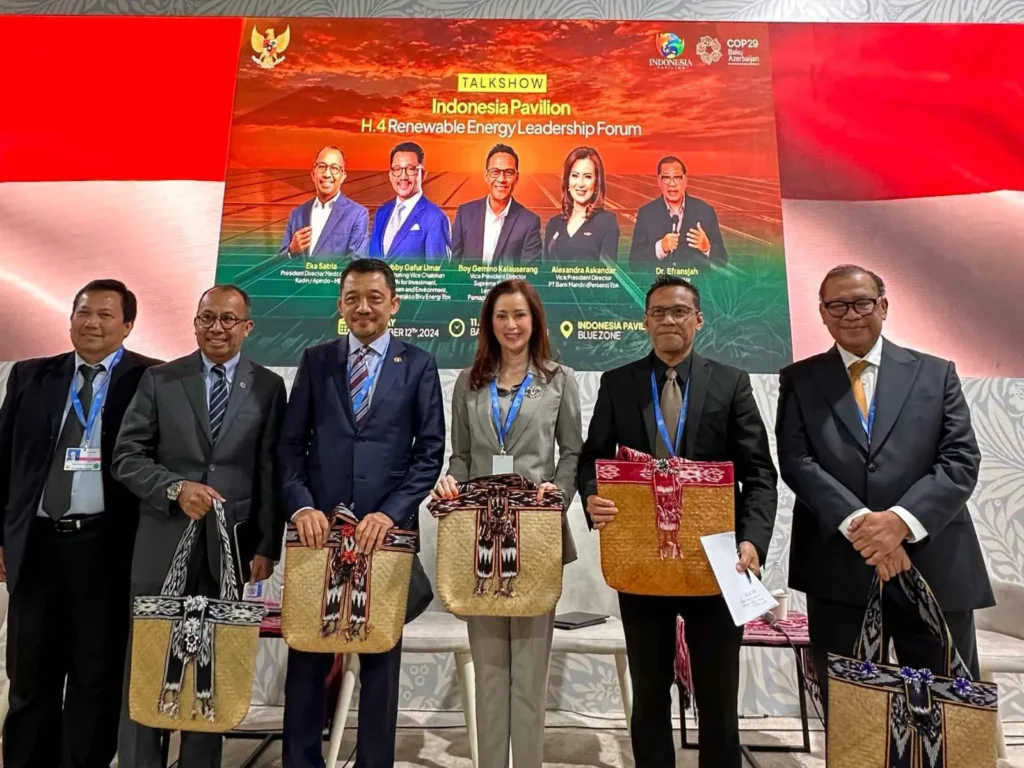
“The total realization of six renewable energy sources in Indonesia has only reached 0.36 percent. These six energy sources include solar, wind, hydro, tidal, bioenergy, and geothermal,” said Alexandra Askandar, Vice President Director of Bank Mandiri during the second day of the Renewable Energy Leadership Forum session at COP 29 in Baku, Azerbaijan (12/11).
Among the six renewable energy sources, geothermal ranks highest in utilization with a usage rate of 10.52 percent, while tidal energy has yet to be realized.
According to Alexandra, the low utilization of renewable energy is caused by investment levels that tend to be lower compared to fossil fuel-based energy. Data from the Institute for Energy Economics and Financial Analysis (IEEFA) shows that renewable energy investment in Indonesia has declined by 4 percent over the past seven years, while investment in fossil energy has instead increased by 2.4 percent.
Furthermore, Alexandra identified four main factors contributing to the high investment costs of renewable energy in developing countries, including the lack of infrastructure required to build renewable energy power plant sites, the high cost of providing the necessary technology compared to developed countries, limited financial instruments specifically designed to address various risks in renewable energy development, and high transaction costs to finance relatively small-scale power plants.
To overcome these challenges, Alexandra emphasized the importance of synergy between policy instruments and financial instruments, where both can support one another.
In terms of policy instruments, relevant stakeholders can establish regulatory frameworks, decarbonization roadmaps, and policies related to carbon tax, trade, and pricing. On the other hand, financial institutions can provide financial instruments that include sustainable financing solutions, such as sustainability-linked loans, sustainability bonds, green bonds, and others.
Bank Mandiri has adopted a client-focused strategic approach toward a low-carbon economic transition. For example, through partnerships with global financial institutions, the establishment of an ESG Desk, and collaboration with the government regarding sustainable business practices.
“We see the combination of policy and financial instruments as the key that will enable financial institutions to play an important role in energy transition projects,” said Alexandra.
Bank Mandiri continues to demonstrate its commitment to supporting sustainable financing, which has reached Rp285 trillion with annual growth of 12.8%. As of September 2024, Bank Mandiri has disbursed Rp10 trillion in financing specifically for the renewable energy sector.
“We would like to invite stakeholders, partners, and the global community to work together with Bank Mandiri and become sustainability champions. To optimize renewable energy investment potential in Indonesia, we need to address various key challenges, open dialogue regarding existing financing schemes and potential new financing opportunities, and accelerate renewable energy development in Indonesia,” Alexandra concluded.