
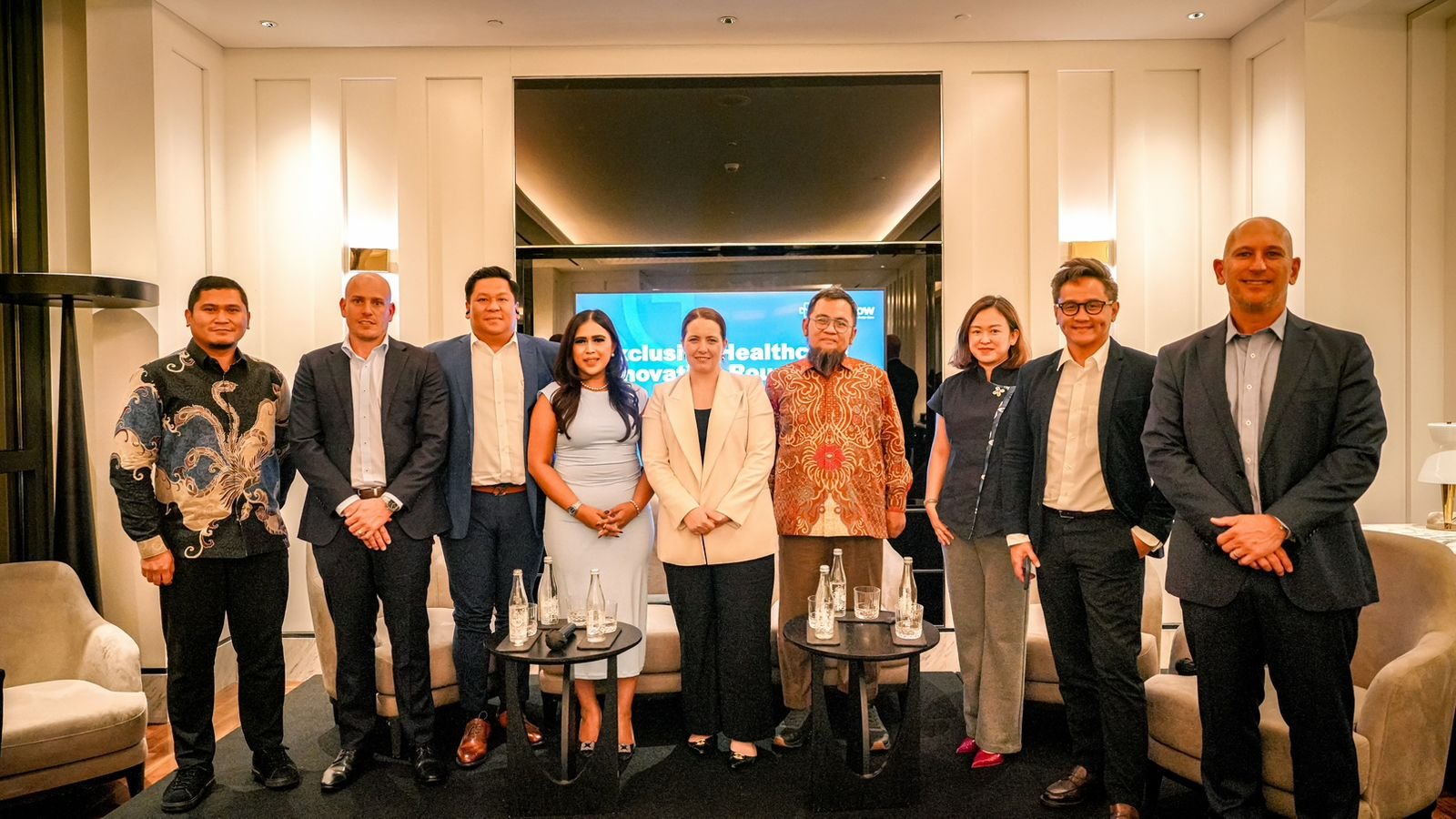
Jakarta, April 24, 2026 – Australian med-tech company Mediflow is expanding into Southeast Asia by positioning Indonesia as a key strategic market, amid growing demand for internationally standardized hospital infrastructure and enhanced surgical safety. Following its successful track record delivering advanced operating theatre infrastructure across leading hospitals in Australia, as well as its recent expansion into Thailand, including an upcoming project at Bumrungrad Hospital Phuket, Mediflow is now entering the Indonesian market as its next phase of regional growth.

Focuses on integrated clean air systems for healthcare environments, Mediflow delivers advanced ventilation technology in operating rooms designed to improve patient safety while supporting sustainable hospital performance. Its solutions emphasize improved air quality and infection control—critical factors in reducing surgical site infections and enhancing long-term operational efficiency.
This expansion aligns with Indonesia’s healthcare transformation agenda, where infrastructure modernization has become a key priority to improve service quality and strengthen the sector’s global competitiveness.

Jordan Gear, Founder and Managing Director of Mediflow, emphasized that the operating room environment is increasingly recognized as a critical component of modern healthcare systems. “We are excited to expand into Indonesia as the country continues to advance its healthcare infrastructure toward global standards. At Mediflow, we believe clinical governance starts with transparency, capturing outcomes so we can continuously improve patient safety. Without proper surveillance, we can’t make informed decisions. Operating theatres shouldn’t just be seen as compliance requirements, they are strategic assets that directly impact both patient outcomes and hospital performance,” he said.
This perspective underscores a broader industry shift toward data-driven healthcare management, where infection control is no longer viewed as an isolated clinical issue, but as a system-wide performance indicator. He also noted that Surgical Site Infections (SSIs) can cost between USD 10,000 and USD 100,000 per case, yet these are often absorbed as hidden costs within hospital systems
Clinical insights indicate that up to 90% of infections in clean surgical procedures, such as orthopedic and implant surgeries are associated with airborne contamination. This underscores the importance of ventilation systems, airflow control, and clean-room design in reducing infection risks and improving clinical outcomes.
While global benchmarks provide a clear direction, the challenge becomes more pronounced in emerging healthcare systems. In Indonesia, where infection rates are estimated to be up to three times higher than global benchmarks and standardized data remains limited, strengthening operating room infrastructure presents a significant opportunity to improve patient safety and healthcare outcomes.
Addressing these challenges requires not only awareness, but also the adoption of integrated technologies that can improve environmental control in operating rooms. Mediflow offers a modular solution that integrates airflow systems, HEPA filtration, surgical lighting, and structural support into a single platform. This approach is designed to accelerate both construction and renovation processes while ensuring a safer and more efficient surgical environment.

In line with this, Lauren Adams, Australia’s Trade and Investment Commissioner, highlighted Australia’s longstanding partnership with Indonesia to support strengthened healthcare systems. “Australia is well regarded for its healthcare capabilities, including healthcare systems and infrastructure, specialist clinical expertise, education, skills, digital health and innovation. We are seeing strong growth in Australian companies exploring opportunities in Indonesia, importantly these companies place a strong emphasis on partnerships—working closely with local hospitals, clinicians, and industry stakeholders to ensure solutions are fit-for-purpose and address the real needs of patients,” she said.
She also acknowledged both the opportunities and complexities of the Indonesian market as Indonesia represents a significant growth opportunity, given its scale, rising demand for healthcare services, and strong commitment to improving the quality and capacity of the sector. While the market can be complex, there is clear momentum from both government and industry to strengthen the healthcare system, not only in infrastructure, but also in skills, education, and long-term capability building. The Australian Trade and Investment Commission is committed to supporting stronger commercial partnerships in Indonesia’s healthcare sector, bringing the best of Australia’s expertise and capabilities to support Indonesian industry and government to realise their ambitions for the sector.

The importance of environmental control is further reinforced by clinical and scientific insights. dr. Ridha Wahyutomo, M.Arch, SpMK, CHRA, FISQua, a clinical microbiologist, representative of INASIC with expertise in architecture, emphasized that infection is not solely a patient-related issue, but a complex interaction involving the environment. “Infection is the interaction between the host, the agent, and the environment. However, the environment, particularly air quality, is often overlooked, even though it plays a critical role in transmission. There is no truly sterile room in the real world, only clean rooms. That is why environmental control, including ventilation, temperature, and humidity, is essential in reducing infection risk. ACH and air pressure are important factors in the operating room to ensure that infection transmission can be properly controlled,” he said.

These findings are echoed by clinicians working directly in operating rooms, where infection risks are encountered in real time. From a frontline clinical perspective, Dr. Ricky Edwin P. Hutapea, Sp.OT, SubSp. PL (K), Orthopedic Surgeon at Eka Hospital and Chairman of KOPOTIS, also highlighted the real-world impact of infections in operating rooms. “Infection is the nightmare for every surgeon. Maintaining a sterile operating room environment is critical to preventing complications and ensuring patient recovery. However, infection control does not rely on a single factor, but rather on four key pillars, such as the patient, the environment or infrastructure, the behavior of the surgical team, and the hospital’s infection control committee. Consistency across these four pillars is essential to improving patient safety,” he said.

Beyond collaboration, structural transformation through ecosystem development is also critical to strengthening Indonesia’s healthcare sector. From an ecosystem perspective, Cita Vaga, Vice President Sales & Business Development at D-HUB SEZ, emphasized the role of special economic zones as catalysts for healthcare innovation. “D-HUB SEZ is designed as a collaborative platform that brings together healthcare providers, global institutions, and technology innovators within an integrated ecosystem. Our goal is not only to improve service quality, but also to accelerate knowledge transfer and help establish new standards for healthcare delivery in Indonesia,” she explained.
With both public and private sectors aligning on the need for improvement, the stage is set for greater investment and innovation in healthcare infrastructure. As part of its initial market entry in Indonesia, Mediflow is engaging with a broad range of stakeholders to raise awareness of the importance of surgical environment standards, while exploring potential collaborations to support the development of hospitals aligned with global benchmarks.
With rising demand for high-quality surgical services and the government’s focus on strengthening the national healthcare system, investment in operating room technology and infrastructure is expected to play a critical role in building a more resilient, efficient, and internationally competitive healthcare sector.