
IISF 2024: Bank Mandiri Commits to Achieve a Low-Carbon Economy
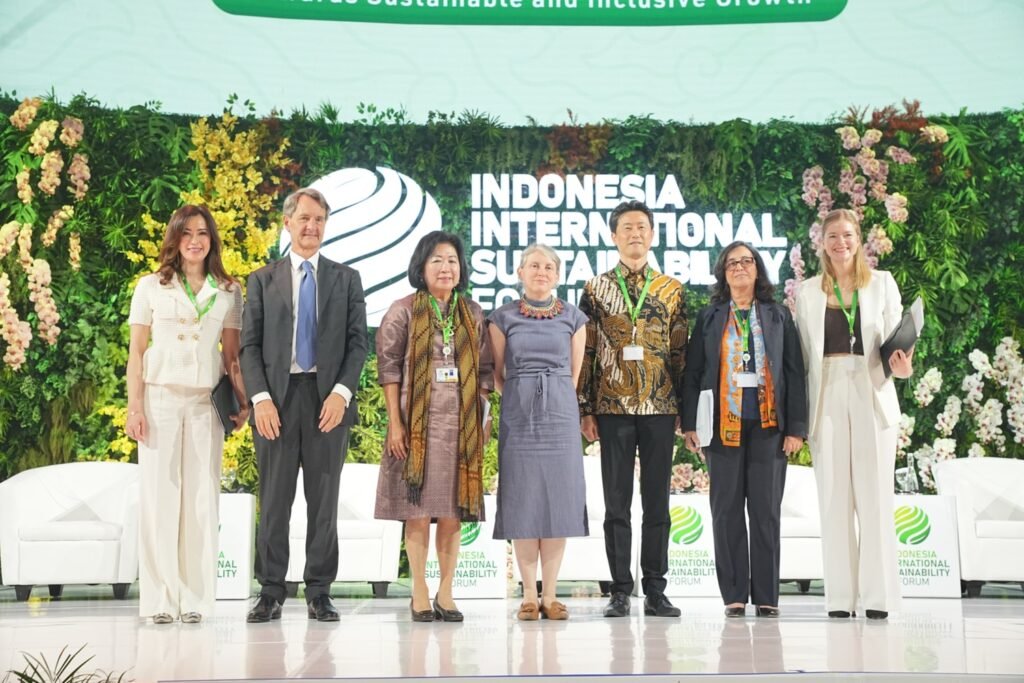
Jakarta, September 9, 2024 – As a state-owned bank leading in green financing, Bank Mandiri is highly committed to supporting the government’s efforts to achieve net zero emissions (NZE) by 2060. This was conveyed by Bank Mandiri Vice President Alexandra Askandar during the Indonesia International Sustainability Forum (IISF) 2024 discussion session held at JCC Senayan, Jakarta, on Friday, August 5, 2024, with the theme Financing Enabler for ESG (APINDO & Kearney Session). IISF is a platform for collaboration with stakeholders to decarbonize, accelerate, and achieve sustainable growth. “In order to improve energy efficiency, Bank Mandiri has transformed through the digitalization of services with SuperApps like Livin’ and Kopra,” said Alexandra. In addition, Bank Mandiri has explored carbon offset strategies, including the purchase of carbon credits and investments in carbon projects such as land restoration and conservation. Bank Mandiri also plays a role as a development agent. “Bank Mandiri’s commitment to leading Indonesia’s transition towards a low-carbon economy is carried out with a client-focused approach,” said Alexandra. For this reason, Bank Mandiri has specifically established an ESG Desk, offering sustainability-linked loans (SLL), financing for companies in transition, and other green products. Through the ESG Desk, Bank Mandiri has organized many focus group discussions (FGD), workshops, and seminars for Bank Mandiri clients such as PLN Group, Pertamina Group, Semen Indonesia Group, Sinarmas Group, and other major corporate clients. The initiative to promote sustainable financing has also been extended to the retail sector, where the bank with the golden ribbon logo has launched green mortgages and green mutual funds. Alexandra mentioned that achieving Indonesia’s low-carbon economy targets will not be easy, as there are challenges that need to be addressed. Firstly, Indonesia has been using fossil fuels for quite some time, so it will take a considerable amount of time to transition to more environmentally friendly energy sources. However, Alexandra remains optimistic due to Indonesia’s abundant renewable energy potential. On the other hand, she also highlighted the need for regulatory and policy support through incentive and disincentive mechanisms, such as subsidies and carbon taxes. According to her, incentive mechanisms can impose financial consequences on high-emission businesses while providing incentives for businesses that transition to sustainable practices. “However, I believe that with strong policies and mechanisms to support climate investment, we no longer have to choose between sustainability and growth, as both can go hand in hand to achieve our sustainability goals,” Alexandra concluded.